

Introduction
In today’s digital marketplace, a website is far more than an online presence—it is a powerful business asset that influences customer perception, generates leads, supports sales, and drives long-term growth. However, simply having a website is no longer enough. Modern consumers expect websites to be fast, intuitive, secure, and capable of delivering exceptional user experiences across all devices.
A high-performance website is designed not only to look professional but also to function efficiently and support business objectives. It helps attract visitors, keep them engaged, encourage conversions, and build trust with potential customers. Businesses that invest in high-performance websites often experience improved customer satisfaction, stronger search engine visibility, and higher revenue opportunities.
As competition continues to grow across every industry, the quality and performance of a website can significantly impact business success. Understanding the key features that contribute to website performance is essential for organizations looking to maximize their online potential.
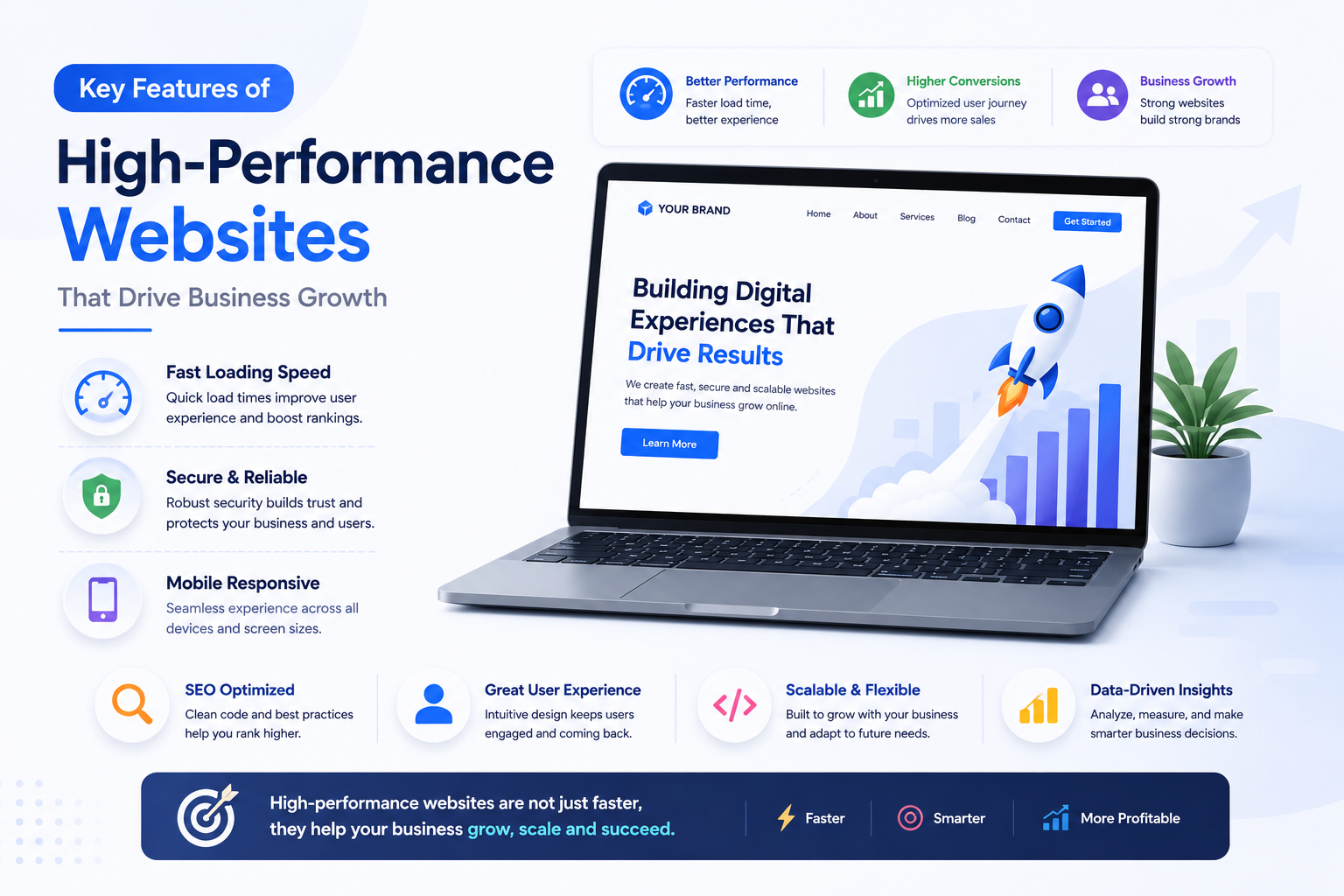
Fast Loading Speed
Website speed is one of the most important factors affecting user experience and business performance.
Modern users expect websites to load almost instantly. If a page takes too long to load, visitors are likely to leave before interacting with the content. Slow-loading websites not only frustrate users but also negatively impact search engine rankings and conversion rates.
High-performance websites are optimized to deliver content quickly regardless of device or internet connection speed. Optimized images, efficient coding practices, caching technologies, and reliable hosting infrastructure all contribute to faster performance.
A fast website improves customer satisfaction, increases engagement, and creates a positive first impression that encourages visitors to explore further.
Mobile Responsiveness
The majority of online traffic now comes from mobile devices. Customers expect websites to provide seamless experiences whether they are browsing from a smartphone, tablet, laptop, or desktop computer.
A high-performance website adapts automatically to different screen sizes while maintaining usability and visual consistency.
Responsive design ensures that navigation remains intuitive, content remains readable, and interactive elements function properly across all devices.
Businesses that prioritize mobile responsiveness improve accessibility, enhance user experiences, and increase the likelihood of converting mobile visitors into customers.
User-Friendly Navigation
Navigation plays a critical role in how users interact with a website.
Visitors should be able to find information quickly and easily without confusion. Clear menus, logical page structures, and intuitive navigation pathways help users move through the website efficiently.
When users can locate services, products, contact information, or resources without difficulty, they are more likely to remain engaged and continue exploring.
Poor navigation often results in frustration and high bounce rates, while user-friendly navigation contributes to stronger engagement and better conversion outcomes.
Strong User Experience (UX)
A high-performance website is built around the needs and expectations of its users.
User experience encompasses every interaction visitors have with a website, from browsing content to completing purchases or submitting inquiries.
Effective UX design focuses on simplicity, usability, accessibility, and convenience. Every element should help users accomplish their goals efficiently.
Businesses that invest in user-centered design create experiences that increase satisfaction, encourage engagement, and build long-term customer loyalty.
A positive user experience often becomes a key competitive advantage in crowded markets.
Search Engine Optimization (SEO)
A website cannot drive business growth if potential customers cannot find it.
Search Engine Optimization is an essential component of high-performance websites because it improves visibility in search engine results.
Effective SEO involves optimizing content, site structure, page speed, mobile usability, metadata, and technical elements that help search engines understand and rank the website.
A well-optimized website attracts qualified organic traffic, increases brand exposure, and generates valuable business opportunities.
Long-term growth often depends on a strong SEO foundation that continuously drives relevant visitors to the website.
High-Quality Content
Content remains one of the most influential factors in website performance.
Visitors come to websites seeking information, solutions, products, or services. High-quality content helps answer their questions, address their concerns, and guide them toward informed decisions.
Effective content establishes authority, builds trust, and demonstrates expertise within an industry.
A high-performance website regularly publishes relevant, informative, and engaging content that provides genuine value to its audience.
Strong content also supports SEO efforts and contributes to higher engagement levels.
Clear Calls-to-Action
Every business website should have a purpose.
Whether the goal is generating leads, scheduling consultations, encouraging purchases, or collecting inquiries, visitors should clearly understand the next step they need to take.
Calls-to-action guide users toward desired actions and help convert website traffic into measurable business results.
High-performance websites strategically place calls-to-action throughout the user journey without appearing intrusive or overwhelming.
When users know exactly what action to take, conversion rates often improve significantly.
Security and Data Protection
Trust is a critical factor in online business success.
Customers expect businesses to protect their personal information and provide secure browsing experiences.
A high-performance website implements strong security measures including secure HTTPS connections, data encryption, regular updates, and protection against potential threats.
Security not only protects users but also strengthens brand credibility and customer confidence.
Businesses that prioritize security create safer digital environments and reduce the risk of data breaches or reputational damage.
Scalability for Future Growth
As businesses grow, their digital requirements evolve.
A high-performance website should be capable of handling increased traffic, larger content libraries, additional functionality, and expanding customer bases without sacrificing performance.
Scalability ensures that businesses can continue growing without needing complete website rebuilds or major infrastructure changes.
Future-ready websites provide flexibility and adaptability that support long-term business objectives.
Organizations that plan for scalability are better prepared to respond to market opportunities and changing customer demands.
Consistent Branding
Brand consistency helps businesses establish trust and recognition.
A high-performance website maintains a cohesive visual identity through consistent use of colors, typography, imagery, messaging, and design elements.
Consistent branding creates familiarity and reinforces professionalism.
When visitors encounter a unified brand experience across all pages, they are more likely to remember the business and develop confidence in its services.
Strong branding contributes to stronger customer relationships and increased brand loyalty.
Reliable Performance and Uptime
Website availability is essential for maintaining customer trust and supporting business operations.
A high-performance website remains accessible and functional whenever users need it.
Frequent downtime can lead to lost revenue, reduced credibility, and negative customer experiences.
Reliable hosting infrastructure, performance monitoring, and proactive maintenance help ensure consistent uptime and smooth operation.
Businesses that provide dependable digital experiences are more likely to retain customers and build lasting relationships.
Analytics and Performance Tracking
Continuous improvement is a key characteristic of successful websites.
High-performance websites use analytics tools to monitor visitor behavior, engagement patterns, traffic sources, and conversion performance.
These insights help businesses understand how users interact with their websites and identify opportunities for optimization.
Data-driven decision-making allows organizations to refine strategies, improve user experiences, and maximize return on investment.
Without performance tracking, businesses may miss valuable opportunities for growth and improvement.
Accessibility and Inclusivity
Modern websites should be accessible to all users, including those with disabilities.
Accessibility improvements ensure that websites can be used by a broader audience while complying with best practices and industry standards.
Readable content, proper color contrast, keyboard navigation support, and descriptive alternative text contribute to a more inclusive experience.
Accessible websites demonstrate professionalism, social responsibility, and a commitment to serving all customers effectively.
Inclusivity not only improves usability but also strengthens brand reputation.
How High-Performance Websites Contribute to Business Growth
A high-performance website serves as a powerful growth engine for modern businesses.
It attracts visitors through search engines, engages users through exceptional experiences, builds trust through professionalism and security, and converts traffic into leads and customers.
Every improvement in speed, usability, content quality, and functionality contributes to stronger business outcomes.
Businesses that invest in website performance often experience increased visibility, improved customer satisfaction, higher conversion rates, and stronger long-term growth.
A website should not simply exist online—it should actively support and accelerate business objectives.
Conclusion
High-performance websites are built on a combination of speed, usability, security, scalability, and user-centered design. They provide visitors with seamless experiences while supporting the goals of businesses looking to grow and compete effectively in the digital marketplace.
From fast loading times and mobile responsiveness to strong SEO, clear calls-to-action, and reliable performance, every feature contributes to the overall effectiveness of a website. Together, these elements create a digital platform that attracts visitors, builds trust, encourages engagement, and drives conversions.
In an increasingly competitive online environment, businesses that prioritize website performance position themselves for long-term success. A high-performance website is more than a marketing tool—it is a strategic investment that can significantly influence customer relationships, revenue generation, and sustainable business growth.
Add a Comment