

Introduction
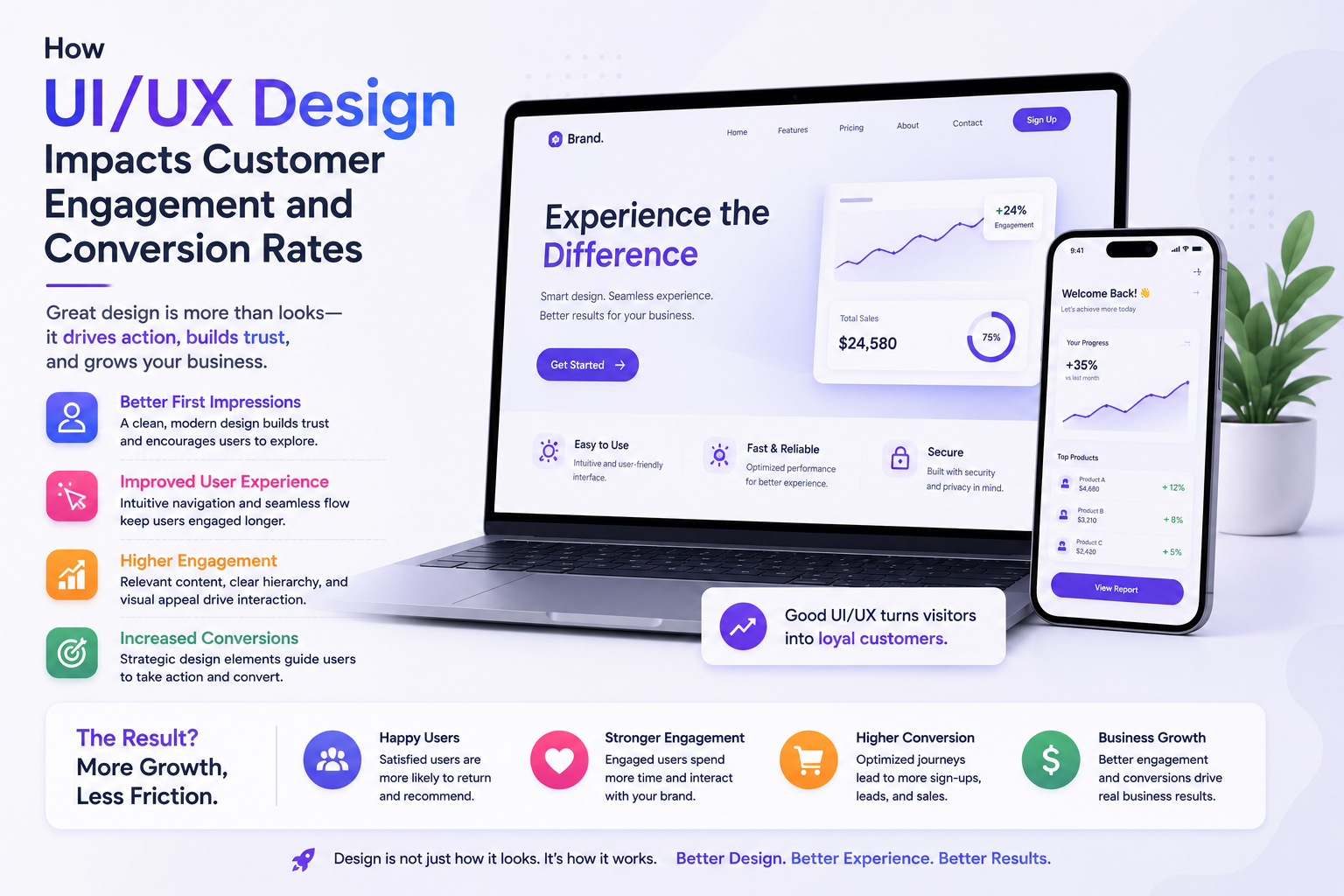
In today’s digital-first world, a business’s website or application is often the first point of interaction between a brand and its customers. While attracting visitors is important, keeping them engaged and guiding them toward meaningful actions is what ultimately drives business growth. This is where UI/UX design plays a critical role.
UI (User Interface) and UX (User Experience) design are more than just visual elements and layouts. They directly influence how users perceive a brand, interact with a digital product, and decide whether to complete desired actions such as making a purchase, filling out a contact form, booking a consultation, or subscribing to a service.
A well-designed user experience can significantly improve customer satisfaction, increase engagement, and boost conversion rates. On the other hand, poor design choices can frustrate users, create confusion, and drive potential customers away. Understanding the impact of UI/UX design is essential for businesses that want to create digital products that not only look attractive but also perform effectively.
Understanding UI and UX Design
Although UI and UX are often discussed together, they serve different purposes.
User Interface design focuses on the visual and interactive elements of a digital product. This includes colors, typography, buttons, icons, spacing, layouts, and overall visual consistency.
User Experience design focuses on how users interact with a product. It involves understanding user behavior, organizing information logically, simplifying navigation, reducing friction, and ensuring users can achieve their goals efficiently.
When both UI and UX are implemented effectively, they create a seamless experience that encourages users to stay longer, interact more, and take desired actions.
The Connection Between User Experience and Customer Engagement
Customer engagement refers to the level of interaction users have with a website, application, or digital platform.
Engaged users spend more time exploring content, interacting with features, and building relationships with a brand. They are more likely to return, share content, and eventually become customers.
UI/UX design directly influences engagement because it determines how easy and enjoyable it is for users to interact with a digital product.
When users can navigate a website effortlessly and find information quickly, they are naturally more inclined to continue exploring. Positive experiences encourage deeper interaction and create stronger connections with the brand.
First Impressions Influence User Behavior
Research consistently shows that users form opinions about websites within a matter of seconds.
When visitors arrive on a website, the design immediately shapes their perception of the business. A clean, modern, and professional interface creates trust and encourages users to stay.
Conversely, cluttered layouts, outdated visuals, inconsistent branding, and poor organization can lead visitors to leave before engaging with the content.
Strong UI design helps establish credibility from the moment users arrive. This positive first impression increases the likelihood that visitors will continue exploring the website and interacting with the brand.
Simplified Navigation Improves Engagement
One of the most important aspects of UX design is navigation.
Users should never struggle to find information or understand where to go next. Clear navigation structures make it easy for visitors to move through a website and access relevant content.
When navigation is intuitive, users can focus on their goals instead of trying to understand how the website works.
A well-organized menu structure, logical page hierarchy, and clear pathways encourage visitors to explore more pages and spend more time on the platform.
The easier it is for users to navigate, the higher the engagement levels tend to be.
Better User Experiences Reduce Bounce Rates
Bounce rate refers to the percentage of visitors who leave a website without interacting further.
Poor user experiences often contribute to high bounce rates. Slow-loading pages, confusing layouts, difficult navigation, and overwhelming content can cause users to abandon a website quickly.
Effective UX design addresses these issues by creating smooth and intuitive experiences.
When users can easily access information and complete tasks, they are more likely to remain on the website and continue their journey.
Reducing bounce rates not only improves engagement but can also positively influence search engine performance.
Mobile-Friendly Design Enhances Accessibility
Mobile devices account for a significant share of internet traffic worldwide.
Modern users expect websites and applications to function seamlessly across smartphones, tablets, and desktop computers.
Responsive UI/UX design ensures that content adapts to different screen sizes while maintaining usability and readability.
A mobile-friendly experience improves accessibility and convenience, making it easier for users to engage with content regardless of the device they use.
Businesses that prioritize mobile experiences often see higher engagement rates and improved customer satisfaction.
Building Trust Through Professional Design
Trust is one of the most important factors influencing customer behavior.
Users are more likely to engage with and purchase from businesses that appear professional and reliable.
UI design contributes to trust by creating visually appealing, organized, and consistent experiences. Elements such as professional branding, clear messaging, customer testimonials, and secure browsing indicators reinforce credibility.
UX design further strengthens trust by ensuring interactions feel predictable and frustration-free.
When users feel confident in a website or application, they are more willing to take meaningful actions.
How UI/UX Design Influences Conversion Rates
Conversion rates measure how effectively a website or application turns visitors into customers, subscribers, or leads.
Every element of UI and UX design influences the likelihood of conversion.
A user-friendly experience removes barriers that might prevent visitors from completing desired actions. Simplified forms, intuitive workflows, clear messaging, and well-placed calls-to-action all contribute to higher conversion rates.
When users can complete tasks quickly and confidently, they are more likely to move forward in the customer journey.
Effective design guides users naturally toward conversion goals without creating unnecessary friction.
The Role of Visual Hierarchy in Conversions
Visual hierarchy refers to the arrangement of design elements in a way that directs user attention toward the most important information.
Strong visual hierarchy helps users understand content quickly and identify key actions.
Important elements such as headlines, service offerings, contact forms, and call-to-action buttons should stand out clearly within the design.
When users can easily identify the next step they should take, conversion rates typically improve.
A thoughtful visual hierarchy creates a smoother and more intuitive decision-making process.
Clear Calls-to-Action Encourage User Action
Calls-to-action are among the most important components of conversion-focused design.
Whether encouraging users to request a quote, schedule a consultation, download a resource, or make a purchase, calls-to-action should be visible and easy to understand.
UI design helps highlight these elements through color, size, contrast, and placement.
UX design ensures that calls-to-action appear at the right moments in the user journey.
When users know exactly what action to take and why it benefits them, conversions become more likely.
Faster Websites Lead to Higher Conversion Rates
Website performance has a direct impact on both engagement and conversions.
Users expect websites to load quickly and respond instantly to their interactions.
Even small delays can negatively affect user satisfaction and reduce conversion rates.
Effective UI/UX design considers performance optimization as part of the overall experience. Fast-loading pages create smoother interactions and reduce the likelihood of abandonment.
Businesses that prioritize speed often see significant improvements in customer retention and conversion performance.
Personalization Creates More Meaningful Experiences
Modern users increasingly expect personalized experiences.
UX design helps businesses understand user behavior and create experiences tailored to specific needs and preferences.
Personalized content, recommendations, and user journeys make interactions feel more relevant and valuable.
When users feel understood, they are more likely to engage with a brand and complete desired actions.
Personalization enhances both customer satisfaction and conversion rates.
The Long-Term Business Value of UI/UX Design
Many businesses view UI/UX design as a visual enhancement, but its impact extends far beyond appearance.
Effective design contributes to customer satisfaction, brand trust, user retention, engagement, and revenue growth.
Businesses that invest in user-centered design often experience stronger customer relationships, lower support costs, improved conversion rates, and greater long-term profitability.
As competition continues to increase across digital markets, exceptional user experiences have become a key differentiator.
Organizations that prioritize UI/UX design are better positioned to meet customer expectations and achieve sustainable growth.
Conclusion
UI/UX design plays a fundamental role in shaping how customers interact with digital products. From creating strong first impressions and improving navigation to reducing friction and increasing conversions, every aspect of the user experience influences business performance.
A well-designed website or application keeps users engaged, builds trust, and guides them naturally toward meaningful actions. Businesses that invest in thoughtful UI/UX design create digital experiences that not only attract visitors but also convert them into loyal customers.
In today’s competitive digital landscape, UI/UX design is no longer optional. It is one of the most effective tools for improving customer engagement, increasing conversion rates, and building long-term business success.
A wonderful serenity has taken possession of my entire soul, like these sweet mornings of spring which I enjoy with my whole heart. I am alone, and feel the charm of existence in this spot, which was created for the bliss of souls like mine. I am so happy.
my dear friend, so absorbed in the exquisite sense of mere tranquil existence, that I neglect my talents.
I feel that I never was a greater artist than now. When, while the lovely valley teems with vapour around me, and the meridian sun strikes the upper surface of the impenetrable foliage of my trees, and but a few stray gleams steal into the inner sanctuary.