

Introduction
In today’s digital world, a website is often the first interaction potential customers have with a business. Whether someone is searching for products, services, or information, your website plays a critical role in shaping their perception of your brand. A slow, insecure, or difficult-to-use website can drive visitors away within seconds, while a fast, secure, and user-friendly website can help attract customers, build trust, and generate revenue.
Modern consumers expect websites to deliver seamless experiences. They want pages to load quickly, information to be easy to find, and their personal data to remain protected. Businesses that meet these expectations are more likely to gain customer confidence and outperform competitors.
A well-optimized website is more than just a digital presence—it is a powerful business tool that supports marketing efforts, improves customer engagement, increases conversions, and contributes directly to long-term growth. Understanding how website performance, security, and usability influence customer behavior can help businesses unlock new opportunities and achieve sustainable success.
Why Your Website Matters More Than Ever
The internet has transformed the way customers discover and interact with businesses.
Before making a purchase or contacting a company, most consumers conduct online research. Your website often serves as the first impression of your business and acts as a virtual storefront available around the clock.
If visitors encounter a website that loads slowly, appears outdated, or feels difficult to navigate, they may leave before learning about your products or services.
On the other hand, a professional website that delivers excellent performance and user experiences creates confidence and encourages visitors to take action.
In many cases, the quality of a website directly influences purchasing decisions and brand perception.
The Impact of Website Speed on Business Growth
Website speed is one of the most important factors affecting user experience.
Today’s users expect websites to load almost instantly. Even a small delay can significantly increase bounce rates and reduce customer satisfaction. When visitors have to wait for pages to load, they often abandon the website and move on to a competitor.
A fast website keeps users engaged and allows them to access information quickly. Visitors are more likely to explore additional pages, spend more time on the site, and interact with content when the browsing experience feels smooth and responsive.
Website speed also affects search engine rankings. Search engines prioritize fast-loading websites because they provide better experiences for users. Improved visibility in search results leads to increased organic traffic and more opportunities to attract potential customers.
Businesses that invest in website performance often see improvements in engagement, lead generation, and conversion rates.
Faster Websites Improve Customer Experience
Customer experience has become a major competitive advantage in the digital marketplace.
A fast website reduces frustration and helps users accomplish their goals efficiently. Whether visitors are browsing products, reading information, booking services, or completing purchases, speed contributes to a smoother experience.
Positive experiences encourage users to return in the future and recommend the business to others.
Customers increasingly expect convenience and efficiency. Businesses that deliver these qualities through fast websites create stronger relationships and improve customer satisfaction.
A positive experience often translates into higher retention rates and increased customer loyalty.
Website Security Builds Trust and Credibility
Trust is essential for online success.
When users visit a website, they expect their personal information, payment details, and browsing activities to remain secure. Any concerns about security can prevent visitors from engaging with a business.
A secure website demonstrates professionalism and commitment to protecting customer data. Features such as HTTPS encryption, secure payment gateways, regular software updates, and strong security measures help create a safer online environment.
Customers are more likely to trust businesses that prioritize security.
Trust influences every stage of the customer journey, from initial interactions to final purchasing decisions. Businesses that establish credibility through strong security practices often experience higher conversion rates and stronger customer relationships.
Security Protects Business Reputation
Cybersecurity threats continue to increase across industries.
Data breaches, malware attacks, and unauthorized access can cause significant financial and reputational damage. Customers may lose confidence in businesses that fail to protect sensitive information.
A secure website helps reduce these risks by implementing safeguards that protect both customer data and business operations.
Maintaining strong security practices not only protects assets but also strengthens brand reputation.
Businesses known for reliability and security are more likely to earn customer trust and maintain long-term relationships.
User-Friendly Websites Encourage Engagement
A website should be easy to use regardless of a visitor’s technical knowledge.
User-friendly design focuses on creating intuitive experiences that help visitors find information quickly and complete tasks effortlessly.
Clear navigation, organized content, readable layouts, and logical page structures all contribute to usability.
When users can easily access information and move through a website without confusion, they are more likely to remain engaged and explore additional content.
User-friendly experiences create positive impressions that encourage visitors to interact with the business and return in the future.
Better Navigation Leads to More Conversions
Navigation is one of the most important components of website usability.
Visitors should never have to search extensively for information or struggle to locate important pages.
A well-structured website guides users naturally through their journey. Whether the goal is requesting a quote, making a purchase, scheduling a consultation, or contacting the business, navigation should support these actions.
Clear pathways help users move efficiently toward conversion points.
Businesses that simplify navigation often experience improved engagement and higher conversion rates because visitors can easily find what they need.
Mobile-Friendly Design Expands Your Reach
Mobile devices account for a significant percentage of internet traffic worldwide.
Customers expect websites to perform flawlessly across smartphones, tablets, and desktop computers.
A user-friendly website adapts to different screen sizes and maintains functionality regardless of the device being used.
Mobile responsiveness improves accessibility and allows businesses to reach a broader audience.
Since search engines prioritize mobile-friendly websites, responsive design also contributes to better search visibility and increased organic traffic.
Businesses that optimize for mobile users are better positioned to capture opportunities in an increasingly mobile-driven world.
Search Engine Benefits of Fast and User-Friendly Websites
Search engines aim to provide users with the best possible results.
As a result, factors such as page speed, mobile responsiveness, usability, and security play important roles in search rankings.
Fast and user-friendly websites tend to perform better in search results because they align with search engine priorities.
Higher rankings increase visibility, attract more visitors, and create additional opportunities for lead generation and customer acquisition.
Businesses that focus on website quality often benefit from both improved user experiences and stronger search engine performance.
How Website Performance Impacts Conversion Rates
Conversion rates measure how effectively a website turns visitors into customers, leads, or subscribers.
A fast, secure, and user-friendly website removes obstacles that might prevent users from taking action.
Visitors are more likely to complete forms, make purchases, schedule appointments, or request information when the process feels simple and trustworthy.
Every improvement in speed, security, and usability contributes to a smoother customer journey.
Even small enhancements can have a significant impact on business results over time.
Higher conversion rates often lead directly to increased revenue and business growth.
Creating a Competitive Advantage
Competition online is stronger than ever.
Customers have countless alternatives available and can switch between businesses within seconds. A website that performs poorly risks losing potential customers to competitors offering better experiences.
Fast, secure, and user-friendly websites help businesses stand out by delivering superior value and convenience.
Exceptional digital experiences create positive impressions that strengthen customer loyalty and improve brand perception.
Businesses that consistently deliver high-quality experiences often gain a significant advantage in competitive markets.
The Long-Term Business Value of Website Optimization
Investing in website performance is not simply about improving technical metrics.
A high-quality website supports marketing efforts, strengthens customer relationships, improves operational efficiency, and drives business growth.
As customer expectations continue to evolve, businesses must adapt and ensure their websites remain fast, secure, and easy to use.
Continuous optimization helps maintain competitiveness and ensures that digital experiences continue to support business objectives.
A website should function as a growth engine that generates value for both customers and the business itself.
Conclusion
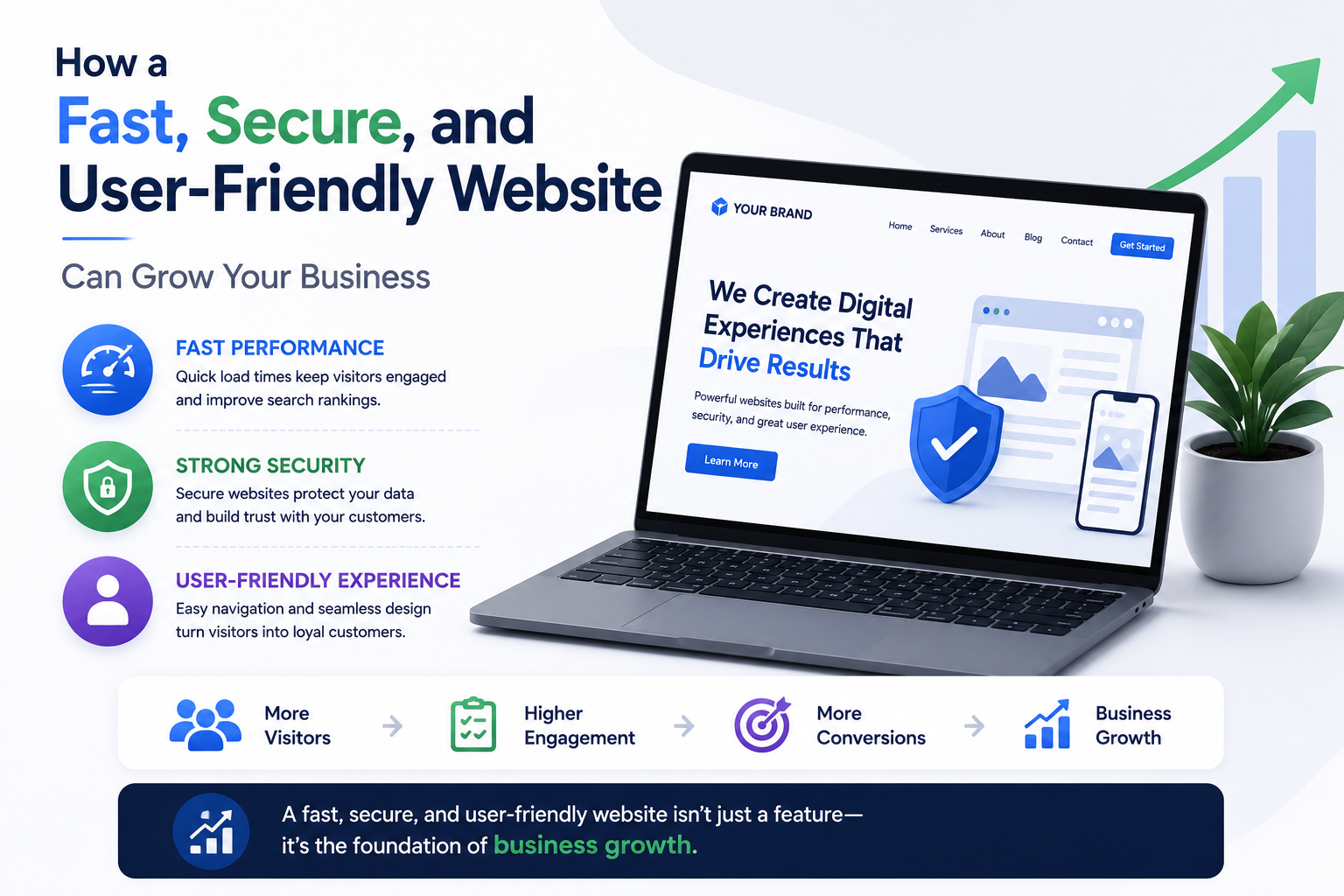
A fast, secure, and user-friendly website is one of the most valuable assets a business can have in today’s digital economy. It influences customer perceptions, improves search engine visibility, increases engagement, strengthens trust, and drives higher conversion rates.
Website speed ensures users can access information quickly, security builds confidence and protects sensitive data, and usability creates experiences that encourage visitors to take action. Together, these elements create a strong foundation for customer satisfaction and business growth.
Businesses that prioritize website performance are better equipped to attract new customers, retain existing ones, and compete effectively in an increasingly digital marketplace. Investing in a high-quality website is not simply a technical decision—it is a strategic investment in long-term success.
Add a Comment