

Introduction
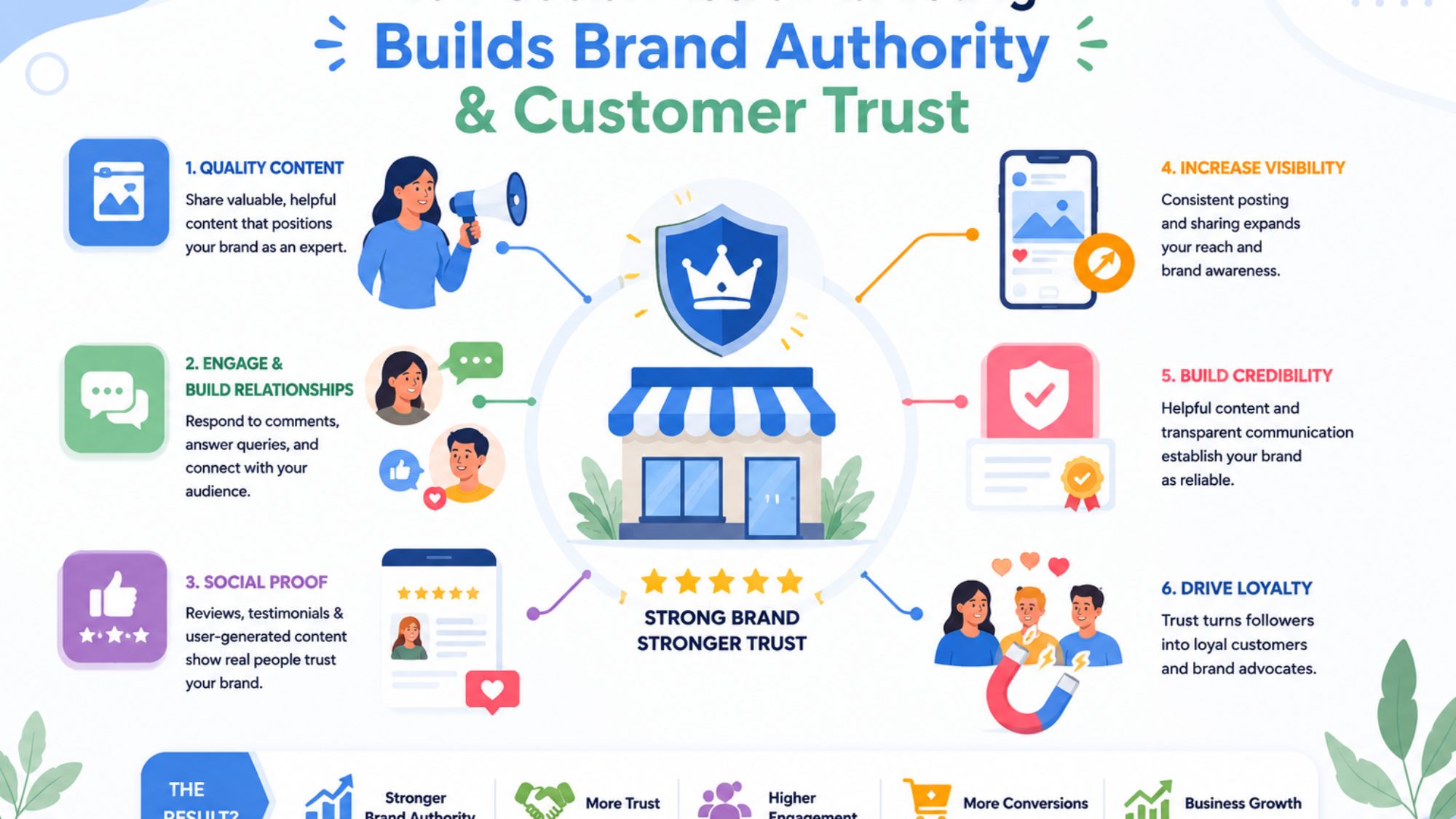
In today’s digital world, customers expect more from brands than just products and services. They want transparency, engagement, authenticity, and meaningful interactions. This is where Social Media Marketing (SMM) plays a crucial role. Social media platforms have evolved beyond communication channels and become powerful tools for building brand authority, establishing credibility, and earning customer trust.
Whether you’re a startup, small business, or established enterprise, your social media presence significantly influences how potential customers perceive your brand. Businesses that actively engage with their audience, share valuable content, and maintain a consistent online presence are more likely to gain customer confidence and industry recognition.
In this comprehensive guide, we’ll explore how social media marketing helps businesses build brand authority and customer trust while driving long-term growth.
What is Social Media Marketing?
Social Media Marketing (SMM) is the process of using social media platforms such as Facebook, Instagram, LinkedIn, X (Twitter), YouTube, and Pinterest to promote a brand, engage with audiences, and achieve business objectives.
Social media marketing involves various activities including:
-
Content creation and publishing
-
Audience engagement
-
Community building
-
Brand awareness campaigns
-
Influencer collaborations
-
Paid advertising
-
Customer support
A well-planned social media strategy helps businesses connect directly with their audience while strengthening their online reputation.
Why Brand Authority Matters in Modern Business
Brand authority refers to the level of trust, credibility, and expertise customers associate with your business.
When customers view your brand as an authority in your industry, they are more likely to:
-
Trust your recommendations
-
Purchase your products or services
-
Choose your business over competitors
-
Recommend your brand to others
-
Become loyal customers
Building authority doesn’t happen overnight. It requires consistent effort, valuable content, and meaningful customer interactions.
Social media provides businesses with the perfect platform to demonstrate expertise and establish themselves as industry leaders.
How Social Media Marketing Builds Brand Authority
1. Showcasing Industry Expertise
One of the most effective ways to establish authority is by sharing valuable knowledge with your audience.
Businesses can create content such as:
-
Educational posts
-
Industry insights
-
How-to guides
-
Expert opinions
-
Case studies
-
Tutorials
When users consistently find helpful information on your social media channels, they begin to view your brand as a trusted source of expertise.
For example, a software development company sharing web development tips, AI insights, and digital transformation strategies positions itself as a knowledgeable industry leader.
2. Consistent Brand Presence
Consistency is a key factor in building authority.
Brands that post regularly and maintain a consistent visual identity appear more professional and reliable.
Consistency includes:
-
Posting schedules
-
Brand colors and design
-
Messaging style
-
Content quality
-
Customer interactions
A strong and recognizable presence helps reinforce your brand identity and keeps your business top-of-mind for customers.
3. Sharing Success Stories and Case Studies
Customers trust real results more than marketing claims.
By sharing:
-
Client success stories
-
Testimonials
-
Project outcomes
-
Before-and-after results
-
Customer achievements
Businesses can demonstrate their expertise and build credibility.
Case studies provide proof that your products or services deliver measurable results, making potential customers more confident in choosing your brand.
4. Thought Leadership Content
Thought leadership content allows businesses to showcase their experience and unique perspective.
Examples include:
-
Industry trends
-
Market predictions
-
Professional insights
-
Research findings
-
Expert commentary
When brands regularly contribute valuable perspectives, they become recognized voices within their industry.
This recognition significantly strengthens brand authority over time.
5. Building an Engaged Community
Authority isn’t just about broadcasting information—it’s also about creating meaningful conversations.
Engaging with your audience through:
-
Comments
-
Polls
-
Questions
-
Discussions
-
Live sessions
helps establish stronger relationships.
Active communities signal trustworthiness and demonstrate that your brand genuinely cares about its audience.
How Social Media Marketing Builds Customer Trust
1. Humanizing Your Brand
Customers trust people more than corporations.
Social media allows businesses to showcase:
-
Team members
-
Company culture
-
Behind-the-scenes content
-
Workplace activities
-
Employee achievements
Humanizing your brand creates emotional connections and makes customers feel more comfortable engaging with your business.
2. Transparency and Authenticity
Modern consumers value authenticity.
Businesses that openly communicate about:
-
Products and services
-
Company values
-
Customer feedback
-
Challenges and improvements
are more likely to earn customer trust.
Authentic communication demonstrates honesty and builds stronger relationships with audiences.
3. Responding to Customer Questions
Quick responses on social media show that a business is attentive and customer-focused.
When businesses respond promptly to:
-
Questions
-
Comments
-
Complaints
-
Feedback
they demonstrate reliability and professionalism.
Excellent customer support on social platforms can significantly improve customer satisfaction and trust.
4. Encouraging User-Generated Content
User-generated content (UGC) includes content created by customers such as:
-
Reviews
-
Testimonials
-
Photos
-
Videos
-
Social media mentions
UGC acts as social proof and often carries more credibility than traditional advertising.
Potential customers trust real customer experiences because they are perceived as unbiased and authentic.
5. Leveraging Customer Reviews
Online reviews play a major role in purchasing decisions.
Positive reviews help businesses:
-
Build credibility
-
Increase trust
-
Improve conversions
-
Strengthen reputation
Sharing customer testimonials and review highlights on social media can reinforce confidence among prospective customers.
The Role of Social Proof in Building Trust
Social proof refers to the influence created when people see others interacting positively with a brand.
Examples include:
-
Customer testimonials
-
Positive reviews
-
Influencer endorsements
-
Case studies
-
User-generated content
-
Customer success stories
When potential customers see others benefiting from your products or services, they are more likely to trust your brand.
Social proof is one of the most powerful trust-building elements in social media marketing.
Social Media Platforms That Help Build Authority
LinkedIn is ideal for:
-
B2B businesses
-
Professional networking
-
Thought leadership
-
Industry discussions
Businesses can establish expertise by sharing professional insights and industry updates.
Facebook helps businesses:
-
Build communities
-
Share updates
-
Engage customers
-
Promote reviews
It remains one of the most effective platforms for relationship building.
Instagram is excellent for:
-
Visual storytelling
-
Brand personality
-
Behind-the-scenes content
-
Customer engagement
Strong visual branding can significantly enhance trust and recognition.
YouTube
Video content is highly effective for demonstrating expertise.
Businesses can use YouTube for:
-
Tutorials
-
Product demonstrations
-
Educational content
-
Industry insights
Video content often creates deeper trust because it allows audiences to connect with the people behind the brand.
Common Social Media Mistakes That Hurt Trust
Many businesses unknowingly damage their credibility through poor social media practices.
Common mistakes include:
-
Inconsistent posting
-
Ignoring customer comments
-
Over-promoting products
-
Posting low-quality content
-
Providing misleading information
-
Buying fake followers
-
Using automated responses excessively
Avoiding these mistakes helps maintain authenticity and strengthen customer relationships.
Best Practices for Building Brand Authority Through Social Media
To maximize results, businesses should:
-
Create valuable content consistently
-
Engage with followers regularly
-
Showcase customer success stories
-
Respond quickly to inquiries
-
Share industry expertise
-
Maintain brand consistency
-
Encourage reviews and testimonials
-
Monitor audience feedback
-
Invest in quality visuals
-
Stay authentic and transparent
These practices help build a trustworthy and authoritative online presence.
Conclusion
Social Media Marketing is far more than a promotional tool—it is a powerful platform for building brand authority and customer trust. By consistently providing value, engaging with audiences, sharing authentic experiences, and showcasing expertise, businesses can establish themselves as credible leaders in their industry.
Customers are more likely to buy from brands they trust, recommend businesses they believe in, and remain loyal to companies that provide genuine value. A strong social media strategy helps create these relationships while enhancing visibility, reputation, and long-term business growth.
In an increasingly competitive digital landscape, businesses that prioritize trust, authenticity, and customer engagement on social media will continue to stand out and achieve sustainable success.
A wonderful serenity has taken possession of my entire soul, like these sweet mornings of spring which I enjoy with my whole heart. I am alone, and feel the charm of existence in this spot, which was created for the bliss of souls like mine. I am so happy.
my dear friend, so absorbed in the exquisite sense of mere tranquil existence, that I neglect my talents.
I feel that I never was a greater artist than now. When, while the lovely valley teems with vapour around me, and the meridian sun strikes the upper surface of the impenetrable foliage of my trees, and but a few stray gleams steal into the inner sanctuary.